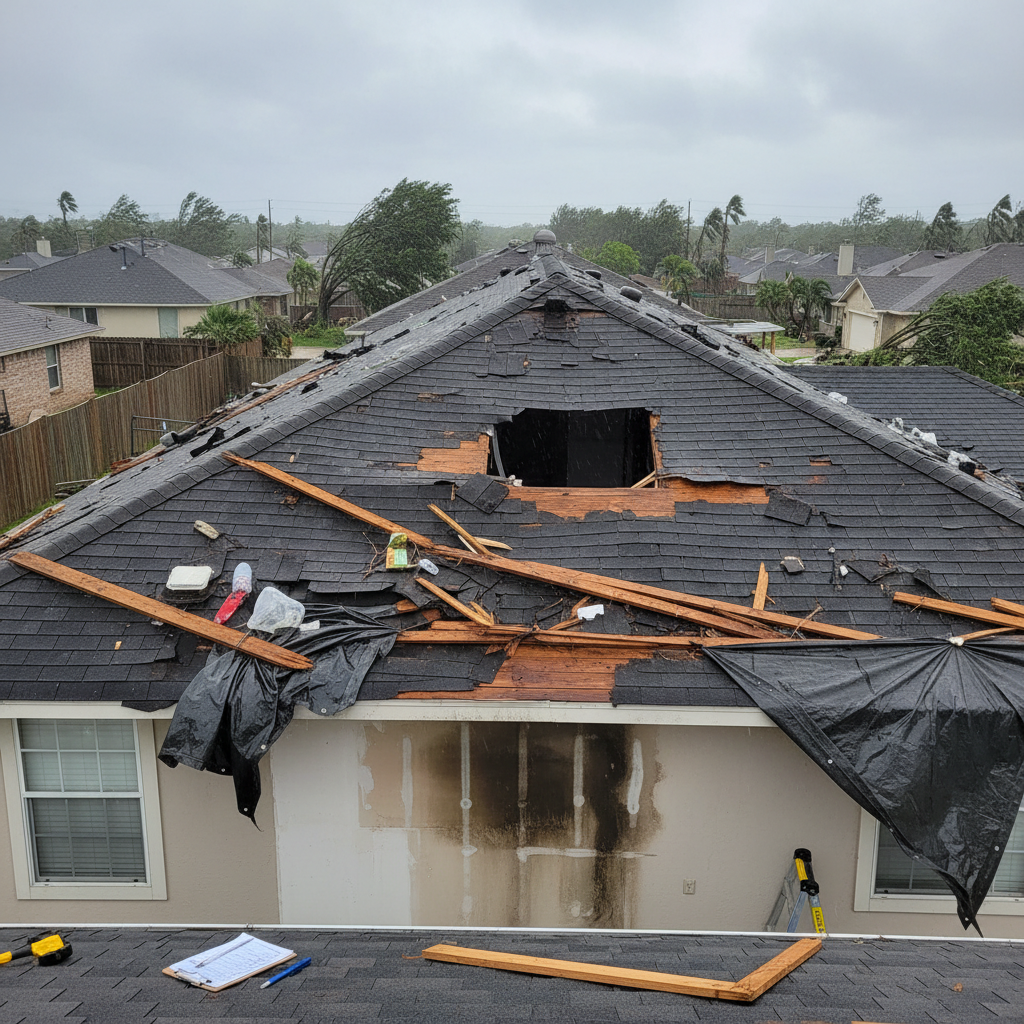
What Florida Homeowners Should Know After a Storm Damages Their Roof
Severe storms are a common reality on the Emerald Coast. High winds, heavy rain, and debris can damage roofs quickly and severely. If your roof has been damaged by a storm, here's a step-by-step guide to protect your home and navigate the insurance process.
Immediate Safety First
Before anything else, ensure your safety:
- Stay off the roof. Don't attempt to assess damage yourself, especially after a hurricane or severe storm.
- Check for hazards. Look for downed power lines, standing water, or structural damage.
- Document visible damage from the ground level with photos and video.
- Make temporary repairs to prevent further water intrusion (tarping, sealing openings, moving belongings)
Step 1: Document the Damage Thoroughly
Your insurance company will need evidence of storm damage. Take comprehensive photos and videos:
- Missing or damaged shingles
- Exposed roof decking
- Damaged flashing or gutters
- Interior water damage, stains, or leaks
- Damaged landscaping, siding, or other structures
Note the date of the storm and any visible damage patterns that align with wind direction. This documentation is crucial for your insurance claim.
Step 2: Contact Your Insurance Company Immediately
Don't delay—file your claim as soon as safely possible after a storm:
- Call your agent or insurer the same day or next morning
- Provide photos and documentation
- Ask about your coverage limits and deductible
- Inquire about the claims process timeline
- Ask if they have preferred contractors (though you're not obligated to use them)
Keep detailed records of all communication—dates, times, names, claim numbers.
Step 3: Get a Professional Roof Inspection
Before scheduling major repairs, hire a certified roofing contractor or home inspector to assess the full extent of damage. Many areas require this for insurance claims. A professional inspection will:
- Identify all visible damage
- Assess underlying structural issues
- Provide a detailed damage report for insurance
- Estimate repair or replacement costs
At Dependable Roofing Systems, we provide free storm damage inspections and coordinate directly with your insurance company.
Step 4: Understand Your Insurance Coverage
Know what your policy covers:
- Actual Cash Value (ACV): Pays for damage minus depreciation (older roofs receive less)
- Replacement Cost Value (RCV): Pays to replace the roof at current prices (better for newer homes)
- Deductible: Your out-of-pocket cost before insurance pays (often $500-$2,500)
- Coverage limits: Maximum the insurer will pay
Important: Some policies have separate deductibles for hurricane or wind damage—often 2-5% of your home's value. This can be $5,000-$25,000+.
Step 5: Don't Rush Into Repairs
Avoid quick-fix contractors who appear immediately after storms. Legitimate roofing contractors are often booked for weeks. Be cautious of:
- Door-to-door contractors offering immediate discounts
- Contractors who pressure you to sign contracts on the spot
- Those who claim they can "guarantee" insurance approval
- Anyone asking for full payment upfront
Step 6: Choose the Right Contractor
When you're ready to repair or replace, work with a reputable contractor:
- Verify licensing and insurance (Florida State Certified Residential Contractor)
- Check reviews from multiple sources (Google, BBB, Angie's List)
- Get multiple estimates (at least 2-3)
- Ask for references from recent storm damage projects
- Confirm they handle insurance coordination
- Review the warranty on materials and workmanship
Contractors led by certified builders and inspectors often provide better results because they understand structural issues beyond just the roof surface.
Step 7: Navigate the Insurance Adjuster Process
Your insurance company will send an adjuster to inspect the damage:
- Schedule a time that works for you
- Have your documentation ready
- Walk the adjuster through all damage
- Ask questions about their assessment
- Request a copy of the adjuster's report
If you disagree with the adjuster's assessment, you can:
- Request a re-inspection
- Hire an independent adjuster
- File a formal dispute
Step 8: Coordinate Repair with Insurance
Work with your contractor to coordinate with insurance:
- Contractor provides detailed repair estimate to insurance
- Insurance sends payment (often split into initial and final payments)
- Contractor completes work to code and insurance standards
- Final inspection and payment after completion
Common Storm Roof Damage Types
Wind damage: Lifted, torn, or missing shingles; bent flashing
Impact damage: Hail dents, punctures, or embedded debris
Water damage: Leaks, water stains, mold growth
Structural damage: Sagging, decking damage, beam/truss issues
Each type requires different expertise to repair properly.
Special Note: Hurricane Season on the Emerald Coast
The Atlantic hurricane season runs June through November. Prepare in advance:
- Have your roof inspected before hurricane season
- Make any needed repairs early
- Know your insurance coverage and deductibles
- Keep photos of your roof on file
- Trim trees away from your roof
Get Professional Help
Don't handle storm roof damage alone. At Dependable Roofing Systems, we provide:
- Free storm damage inspections
- Insurance claim coordination
- Detailed damage documentation
- Expert repair and replacement services
Our certified builder founders have managed hundreds of storm damage projects across the Emerald Coast.
After a storm, call us immediately at (850) 374-3534 for a free inspection and insurance guidance.